Wondering which part of Reston might feel most like home? That is a smart question, because Reston is not just one neighborhood with one vibe. It is a planned community shaped by village centers, lakes, trails, and transit, and that layout can make your day-to-day life look very different depending on where you land. If you are trying to match your lifestyle to the right area, this guide will help you make sense of the options. Let’s dive in.
How Reston is organized
Reston works differently from many Northern Virginia communities. Instead of revolving around a single main street or one central downtown, it is organized around village centers that serve the surrounding neighborhoods with local retail, restaurants, offices, and gathering spaces.
That structure matters in real life. In Reston, what is closest to your home often shapes your routine more than a neighborhood name alone. A nearby lake, trail connection, village center, or Metro stop can have a big impact on how you shop, commute, exercise, and spend your weekends.
Reston Association says the community includes more than 60,000 residents, more than 22,000 homes, over 1,300 acres of open space, four lakes, more than 55 miles of trails, 15 pools, and 54 tennis and pickleball courts. That mix helps explain why Reston appeals to so many different buyers and renters.
What daily life depends on
If you are comparing villages, start with a simple question: What do you want closest to home? In Reston, that answer often tells you more than a map does.
For some people, the priority is a lakefront setting and easy walking routes. For others, it is neighborhood retail, bus access, or a more urban mix of dining and events. Reston offers all of those, but not in the same way everywhere.
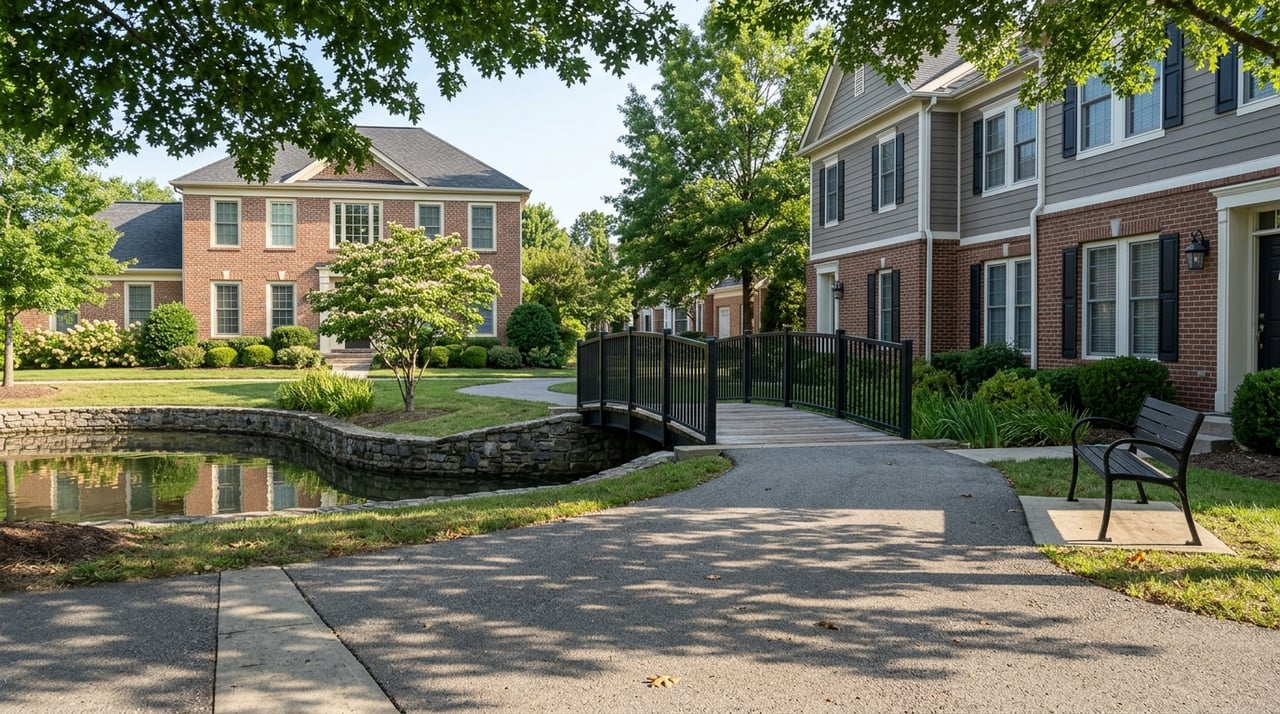
Fairfax County also describes a broad housing mix across the community. That includes lakefront homes, homes near golf courses, suburban neighborhoods with curving streets, townhomes in wooded settings, and high-rise multifamily buildings near Lake Anne and Reston Town Center.
Lake Anne lifestyle
Lake Anne is the oldest village center in Reston and opened in 1965. Fairfax County designated it as a historic district because it best reflects the original vision for Reston.
In practical terms, Lake Anne tends to appeal to people who like a pedestrian-scaled setting with lake views, plazas, and a mixed-use feel. Residences, offices, and retail are gathered around the water and public spaces, which gives the area a distinct older-core character compared with other parts of Reston.
If your ideal weekend includes walking by the water, spending time around a plaza, or enjoying a neighborhood with a strong sense of place, Lake Anne may stand out. Reston Association also identifies the lake as a recreation asset for boating, fishing, wildlife watching, and picnicking, and there is a public fishing dock at Lake Anne Village Center.
The trail system makes this area easy to reach on foot or by bike. Local circulation is also supported by Fairfax Connector RIBS 1 and RIBS 3 on the Lake Anne and Hunters Woods side of Reston.
Who Lake Anne may suit
- Buyers or renters who want a more historic, mixed-use setting
- People who enjoy lake-edge walking and public gathering spaces
- Those who value trail access and neighborhood character
- Shoppers looking for multifamily or mixed-use surroundings
Hunters Woods lifestyle
Hunters Woods offers a different kind of daily rhythm. Fairfax County describes it as a village center with nearby low-rise multifamily housing, a high-rise multifamily building for seniors, neighborhood retail, a place of worship, and the Reston Community Center.
That combination makes Hunters Woods feel especially tied to services, programs, and local errands. Rather than centering on a large retail district, it is more about everyday convenience and community activity.
If you want a location where programs, events, and public resources are part of the experience, Hunters Woods deserves a closer look. Reston Community Center programming includes concerts, family entertainment, performances, and public gatherings across Reston, which adds another layer to the area’s community feel.
Transit supports that lifestyle too. Fairfax Connector’s RIBS 3 serves Reston Community Center, Reston Hospital Center, and the North County Government Center, while local circulators connect into the broader Reston transit network.
Who Hunters Woods may suit
- People who want community services close by
- Residents who like easy local errands over a larger retail hub
- Those who value program and event access
- Households considering nearby multifamily options
South Lakes lifestyle
South Lakes blends lake adjacency, neighborhood retail, and bus access. It sits along Lake Thoreau and includes low-rise multifamily housing, senior mid-rise multifamily housing, and local-serving retail with some direct lake access.
One useful distinction is how the center was designed. A Fairfax County historic-survey report notes that South Lakes Village Shopping Center functions more like a suburban strip-style center, with access primarily by car, unlike Lake Anne’s plaza-based pedestrian design.
That means South Lakes can be a strong fit if you want everyday convenience with a lake nearby, but you are comfortable with a more car-oriented retail layout. It reflects Reston’s hybrid lifestyle well: nature access, neighborhood shopping, and practical transit connections all in one area.
Fairfax Connector Route 507 serves South Lakes Village Center from Wiehle-Reston East, and RIBS 2 links Wiehle-Reston East, Reston Town Center Transit Station, South Lakes Drive, and Herndon Metro.
Who South Lakes may suit
- Buyers or renters who want to live near a lake
- Households who value neighborhood retail for daily needs
- Commuters who want bus connections to Metro
- People comfortable with a more suburban shopping layout
North Point lifestyle
North Point is another neighborhood-serving village center, but its feel is more scaled to daily routines than destination-style activity. Fairfax County describes nearby low-rise multifamily housing, including some affordable housing, along with retail and service uses in the village center.
Vehicle access comes from Reston Parkway, Center Harbor Road, and Lake Newport Road, which supports an easy in-and-out pattern for errands and commuting. The result is a practical, neighborhood-focused setting with direct ties into the larger Reston network.
If you want a local center that feels connected but not overly busy, North Point may be worth exploring. It offers the kind of everyday convenience that can make a big difference when you are thinking about groceries, quick services, and getting around without always heading to the urban core.
Transit options include RIBS 4 to Reston Town Center Transit Station and North Point Village Center, plus Route 558 between Center Harbor and Wiehle-Reston East Metro Station, also serving North Point Village Center.
Who North Point may suit
- Residents who want a neighborhood-scaled environment
- People who value direct bus connections within Reston
- Households focused on everyday convenience
- Shoppers looking beyond the busiest hubs
Reston Town Center lifestyle
Reston Town Center is not one of Fairfax County’s village centers, but it functions as Reston’s regional urban core. It offers the most concentrated walk-to-dining, walk-to-shopping, and walk-to-transit experience in the community.
According to the Town Center, the area includes more than 50 retailers, 35 restaurants, a cinema, and seasonal ice skating. WMATA shows both Reston Town Center Station and Wiehle-Reston East Station on the Silver Line, and Fairfax Connector service is also concentrated here.
If your priority is being close to restaurants, events, shops, and major transit, Reston Town Center will likely feel very different from the villages. It is the best match for people who want a more urban, active environment inside the larger Reston community.
That does not make it better than the villages. It simply serves a different lifestyle, with the villages acting more as neighborhood anchors and Reston Town Center operating as the main regional hub.
Who Reston Town Center may suit
- Buyers or renters who want an urban-style setting
- People who prioritize walkable dining and shopping
- Commuters who want strong transit access
- Residents who enjoy events and a busier atmosphere
Trails, lakes, and recreation
Across Reston, outdoor access is one of the biggest quality-of-life factors. Reston Association says the four man-made lakes cover 125 acres and are used for boating, fishing, wildlife watching, and lakeside picnicking.
The trail system is just as important. With 55 miles of paved pathways and natural-surface trails connecting neighborhoods, facilities, shopping, and other destinations, many parts of Reston feel easier to navigate on foot or by bike than buyers expect.
It is also helpful to know what the lakes are not used for. Swimming is not permitted, so the lifestyle here is more about walking, paddling, fishing, and relaxing near the water than beach-style recreation.
Reston also offers broader community recreation through pools, tennis and pickleball courts, open space, and places like Walker Nature Center, which includes 72 acres of woodlands and a one-mile loop trail.
How to match a village to you
If you are early in your search, focus less on finding the “best” village and more on finding the best fit for your routine. In Reston, a short drive can bring you into a very different environment.
Here is a simple way to think about it:
- Choose Lake Anne if you want a historic, plaza-centered, lake-edge setting.
- Choose Hunters Woods if you want community services and programs close to home.
- Choose South Lakes if you want lake access, neighborhood retail, and solid transit connections.
- Choose North Point if you prefer a neighborhood-scaled center with practical daily convenience.
- Choose Reston Town Center if you want the most urban, walkable, event-oriented environment.
The right answer depends on how you want to live day to day. Your commute, housing style, preferred pace, and how often you use trails, retail, or transit can all point you toward a better fit.
Why a local guide matters
Reston has a wide range of home styles and micro-lifestyles packed into one community. That is part of what makes it appealing, but it can also make your search feel more complicated at first.
A local advisor can help you narrow the options based on what matters most to you, whether that is a condo near transit, a townhome in a wooded setting, a lake-oriented area, or a move that supports a relocation or downsizing transition. That kind of guidance can save time and help you compare places in a more practical way.
If you are considering a move in Reston, Lindene Elise Patton can help you match the right neighborhood feel to your goals with clear, high-touch guidance.
FAQs
What makes Reston different from other Northern Virginia communities?
- Reston is organized around village centers, lakes, trails, and transit links rather than one single downtown, so your daily lifestyle often depends on what is closest to your home.
Which Reston area feels most walkable for shopping and dining?
- Reston Town Center offers the most concentrated walk-to-dining, walk-to-shopping, and walk-to-transit experience, while Lake Anne also has a pedestrian-oriented plaza setting.
Which Reston village is best for lake access?
- Lake Anne and South Lakes are the strongest examples of lake-adjacent living, with Lake Anne known for plaza activity by the water and South Lakes offering lake proximity with neighborhood retail nearby.
Are Reston lakes used for swimming?
- No. Reston Association says the lakes are used for boating, fishing, wildlife watching, and picnicking, but swimming is not permitted.
Which Reston village is most connected to community programs?
- Hunters Woods stands out for its connection to the Reston Community Center and its neighborhood-serving mix of services, programs, and local errands.
Does Reston have different housing types?
- Yes. Fairfax County describes a broad mix that includes lakefront homes, homes near golf courses, townhomes in wooded settings, suburban neighborhoods with curving streets, and high-rise multifamily areas near Lake Anne and Reston Town Center.
