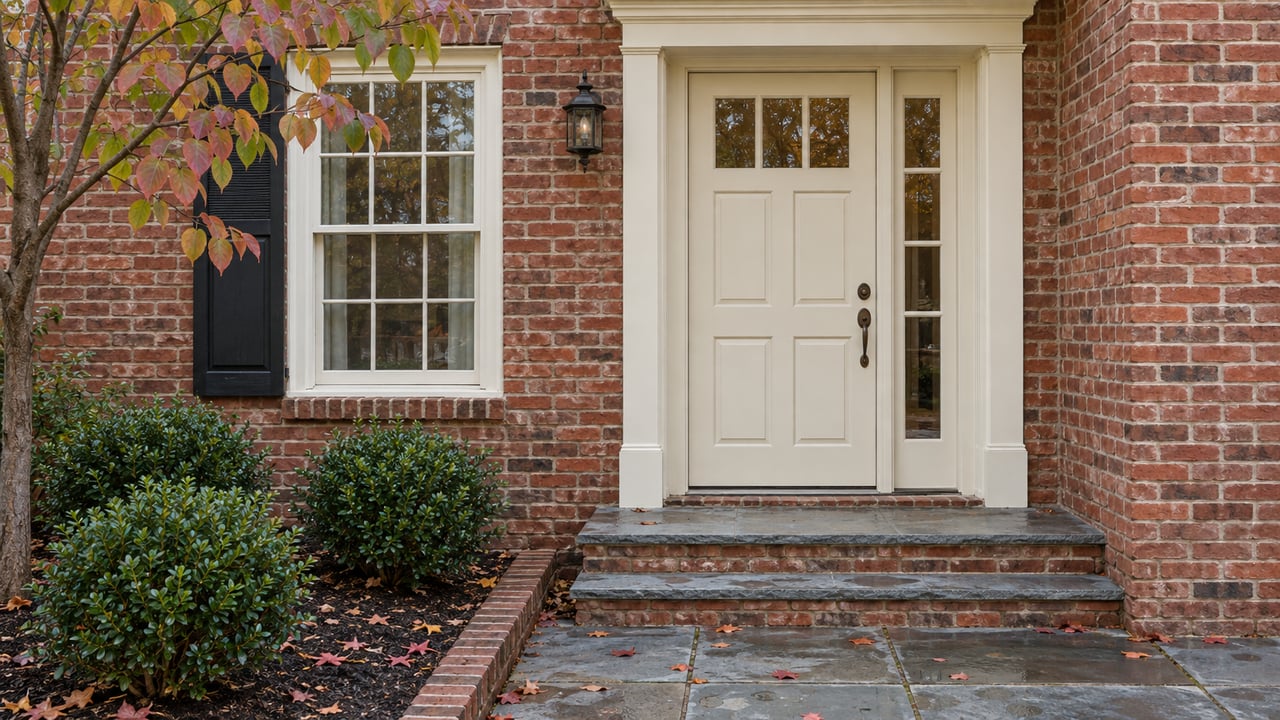
A home in Reston's Soapstone Cluster and a home two neighborhoods over can carry the same Reston Association assessment for 2026—FFXnow reported it at $890 per lot—and share nothing else on the fee line. Soapstone adds its own assessment to maintain the woods, parks, playgrounds, sidewalks, parking lots and car entrances the cluster owns outright. A home with neither a cluster nor a condo association owes Reston Association and stops there. The difference sits entirely in the cluster fee; neither association charge is part of the mortgage.
That gap is the thing worth understanding before you compare two Reston listings by price alone. The number every buyer sees first is the Reston Association assessment. Everything stacked on top of it is not, and in Reston, something is almost always stacked on top of it.
The One Bill Every Reston Lot Owes
Reston Association's board adopted its 2026 budget on November 13, 2025, setting the annual assessment at $890 per lot, a 5% increase over the 2025 rate of $848. Members who qualify for the Fairfax County Tax Relief Program, based on age, disability or income, pay a reduced $445, as Reston Association states. The bill is due January 1 each year, not monthly, with late fees attaching after March 1.
This isn't a fee a buyer opts into. The Deed of Dedication that created Reston attaches the assessment to the lot itself, and Section V.1 states plainly that no owner may escape liability for it through non-use of common facilities or abandonment of the property. Section V.2 makes each year's assessment a continuing lien the moment the board sets it. A new owner inherits the obligation at settlement along with the roof and the driveway, whether or not they ever set foot in one of Reston's 15 pools.
What that money buys is genuinely large in scope. The 2026 budget runs $24.2 million, with assessments supplying roughly $19.4 million of it. Reston Association maintains 15 pools, 54 tennis courts, 55 miles of paved pathways, more than 1,300 acres of open space, four lakes and three ponds, and a 72-acre nature education center, staffed by roughly 96 full-time employees and nearly 350 seasonal workers through the summer months. Reston actually has five lakes, but Lake Fairfax belongs to the Fairfax County Park Authority rather than to RA, which is why association materials count four. Recreation passes for the pools, tennis courts and pickleball courts are folded into the assessment automatically, a change the board made in 2024 after members previously bought them separately.
Why the Number Moved This Year
The $890 figure wasn't a routine adjustment. In an August 2025 draft, RA's Chief Financial Officer Ed Vroom proposed raising the assessment to $923, an 8.8% jump, as the opening move in a five-year plan to lift annual capital contributions from about $2.65 million to a recommended $3.75 million. Board Vice President Izzy Santa flagged the pace as a concern, and by November the board had voted 7-2 to land at $890 instead, closing the gap in part by cutting $175,000 from the swimming pool budget and pulling operating hours back toward the 2024 schedule.
At-large director John Farrell voted against the compromise. As FFXnow reported, he said:
"Our community survey was very clear. Our members value our swimming pools more than any other single feature after our trails."
The disagreement matters to a buyer for a reason that has nothing to do with pool hours specifically. It shows the assessment is not a fixed utility charge that quietly renews. It's a number the board revisits every November against aging infrastructure, including a Lake Newport pool that RA's own Chief Operating Officer said has been losing water at a rapid rate, and a five-year staff forecast that had assessments reaching $1,092 by 2030 under the original ramp. A buyer budgeting against today's $890 is budgeting against a number that has moved every year for at least six years running.
The Other Bills Stack Differently in Every Neighborhood
Reston Association counts more than 160 sub-associations inside its boundary, and that's where the real variation lives. Most Reston townhouses and a large share of its detached homes sit inside a cluster, which is Reston's term for a sub-association covering a defined group of homes. A cluster typically owns the shared parking, the shared open space and often the private roads inside it, with its own board, its own budget and its own fee layered on top of the RA assessment rather than replacing any part of it.
Soapstone Cluster is a useful example: its fee funds administration, grounds maintenance, trash and recycling, snow removal, capital reserves, taxes, insurance and utilities for the property it owns. West Market shows a different version of the same layering.
None of this makes the fees good or bad. It means two homes that look alike on a listing sheet, similar square footage, similar list price, can carry very different real costs depending on whether one sits in a lightly assessed cluster and the other sits in a condo building with a large shared structure to insure and reserve for.
What the Stack Actually Costs by Home Type
Cluster and condo fees are separate from the RA assessment, adding to the ongoing cost of owning a home.
Those numbers land very differently depending on what a buyer is shopping for. Bright MLS recorded a July 2026 median detached sale price in Reston of $1,106,625, a median townhouse price of $709,000, and a median condominium price of $391,000. Detached homes moved fast that month, going under contract in an average of 9 days and closing at 102.3% of original asking price. Condominiums told a slower story, averaging 26 days on market with 108 active listings against a five-year July average of 59, giving condo buyers more room to negotiate than detached buyers had.
That split isn't only about square footage or school assignment. A condo buyer negotiating from a position of more inventory is also the buyer most likely to be absorbing the largest layered fee, since condo dues sit on top of the RA assessment rather than replacing it. A detached buyer competing hard for one of a tighter pool of listings is more likely, though not certain, to land in a cluster with a smaller add-on or none at all. The fee structure and the competitive dynamic move together, and a buyer comparing a detached home to a condo purely on list price is missing the half of the equation that shows up on the resale disclosure packet, not the listing sheet.
The Wrinkle Nobody Priced In
One more layer is worth knowing about for a specific set of Reston properties. Some older lots in Reston were built under Deed Section VI.2(b)(15) to receive centralized air conditioning through a single provider called RELAC. In October 2025, RELAC notified customers that its owner and operator did not intend to continue service in 2026. At its December 11, 2025 meeting, the Reston Association board responded by declaring that the deed section requiring RELAC service would no longer be enforced, citing impossibility, since no other party had come forward willing or able to take over the utility.
For a buyer looking at one of the affected properties, that's a real, current piece of transaction friction that a list price won't reflect. A home served by RELAC is heading toward an HVAC transition that isn't yet reflected in any assessment or reserve line, cluster or condo. It's exactly the kind of detail that only shows up by asking directly and reading the specific disclosure documents for that address, not by comparing median prices across Reston as a whole.
What to Check Before You Write an Offer
The practical takeaway is straightforward even if the fee structure isn't. Before treating a Reston listing as comparable to another one, it's worth confirming three things directly: whether the property sits inside a cluster and what that cluster's current assessment and reserve study show, whether it's a condominium with its own separate budget and master insurance policy, and whether the home falls under the older RELAC service area now facing a transition. Reston Association's resale disclosure packet covers the RA side of that picture, but any cluster or condo association will issue its own separate packet, and Reston Association says Virginia law gives associations 14 days to produce it once payment is received, so timing that request early in a contract matters.
FAQ
Is the $890 Reston Association assessment optional if I don't use the pools or trails? No. The Deed of Dedication that created Reston Association attaches the assessment to the lot itself, and ownership alone creates the obligation regardless of whether the amenities get used.
Does every home in Reston have a cluster fee? Not every one, but most townhouses and many detached homes do. Whether a specific address carries a cluster fee, a condo fee, both, or neither has to be confirmed property by property in the resale disclosure documents rather than assumed from the home type.
What is the Reston Association transfer fee? It's a one-time charge due at settlement, set at $374 for 2026, separate from the recurring annual assessment.
Fee stacks like Reston's are exactly the kind of detail that gets missed between a portal search and a signed contract, and it's the kind of thing Lindene Elise Patton walks through line by line before a client ever writes an offer in Reston. Let's Connect.
This article is general information, not legal, tax or financial advice. Consult a qualified professional about your situation.
